Lorikeet Security: A Competitive SaaS Analysis Edge
In an era where cyber attacks surged by 48% in 2023 alone, according to Verizon's Data Breach Investigations Report, organizations are scrambling for tools...
Decoding the Security Arena: How Lorikeet Stands Out in a Crowded Field
In an era where cyber attacks surged by 48% in 2023 alone, according to Verizon's Data Breach Investigations Report, organizations are scrambling for tools that go beyond basic defenses. At The SaaS Pioneers Collective, we've put Lorikeet Security under our microscope, comparing its comprehensive offensive security platform to key alternatives. This analysis highlights how Lorikeet helps SaaS teams proactively hunt vulnerabilities while integrating compliance and training, making it a versatile choice for modern digital fortresses. Drawing from our team's diverse experiences, including insights from our Asian and Hispanic members who specialize in cloud security, we'll explore where it shines and where rivals might edge ahead.
Quick Comparison Table
| Feature | Lorikeet Security | Flowtriq |
|---|---|---|
| Pricing | Flexible, engagement-based model starting with manual pentests; includes free retesting and bundled services like compliance automation, making it cost-effective for comprehensive programs (e.g., vCISO retainers from $5,000/month). | Typically subscription-based, focused on DDoS protection; may be more affordable for basic uptime needs but lacks bundled security services, potentially adding hidden costs for expansions. |
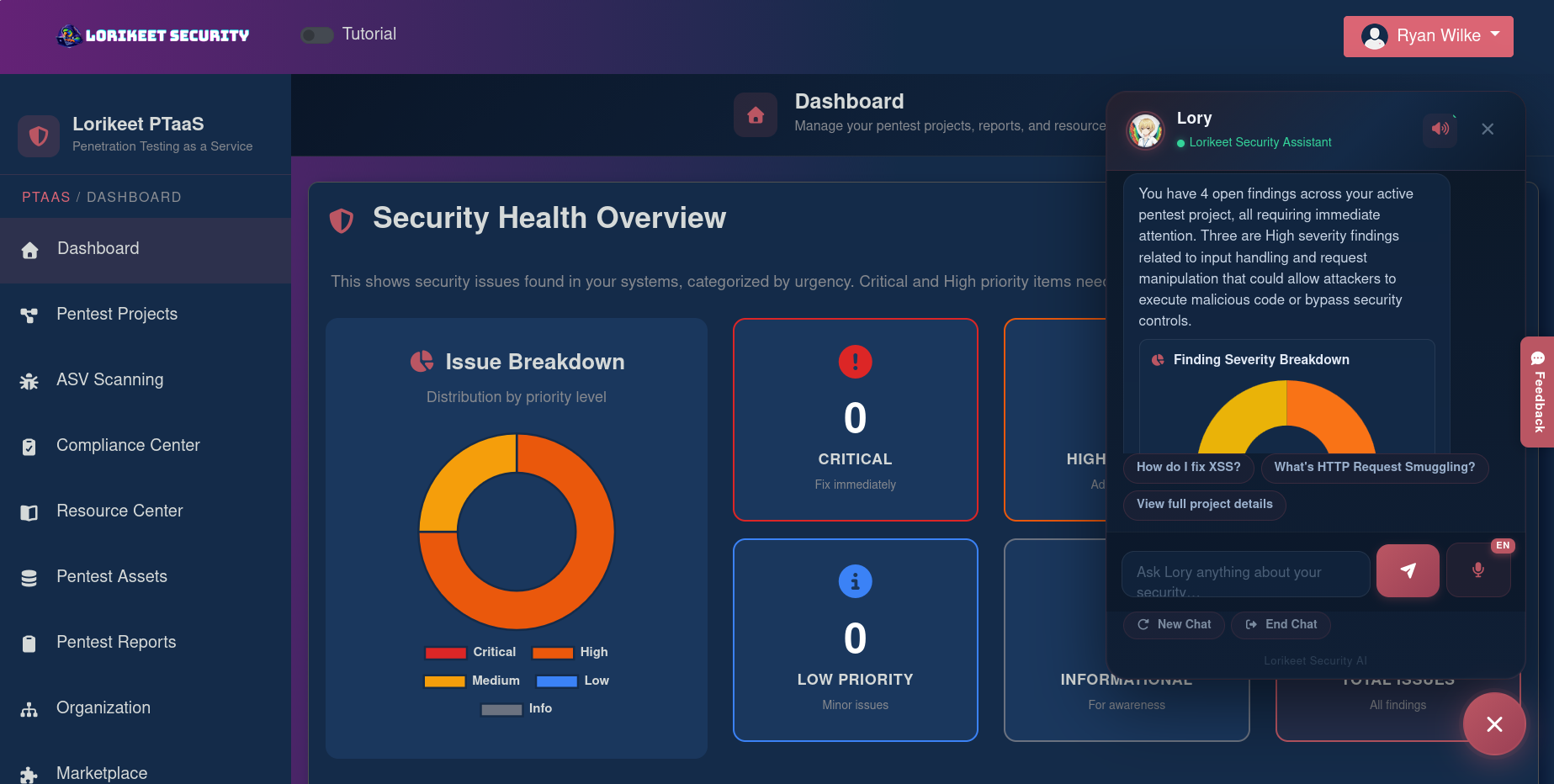
| Ease of Use | User-friendly real-time portal with AI assistant (Lory) for tracking and interaction; our team found it intuitive for non-experts, with step-by-step guidance that speeds up remediation without overwhelming users. | Streamlined for rapid deployment and auto-mitigation; we've heard from community feedback that it's plug-and-play for DDoS scenarios, but it might feel limited for broader security tasks requiring manual oversight. |
| SaaS Features | Full suite including 24/7 attack surface monitoring, compliance automation (e.g., SOC 2, GDPR), and security training with phishing simulations; emphasizes manual testing across apps, APIs, and cloud, delivering audit-ready reports. | Specializes in instant DDoS detection and mitigation, ensuring server uptime; however, it doesn't cover the wide range of vulnerability assessments or employee training that Lorikeet offers, making it more niche. |
| Integration Options | Partners with Vanta, Drata, and Accorp for seamless compliance; integrates with AWS, Azure, GCP, and tools like Lovable AI, allowing for a holistic security program in one platform. | Focuses on quick integrations for network protection; from our discussions, it's effective for real-time threat response but may require additional tools for comprehensive ecosystem compatibility, as shared in user forums. |
Where Lorikeet Security Wins
As a team of SaaS enthusiasts with over 50 years of collective experience, we've debated Lorikeet's strengths extensively, especially during our weekend board game sessions that mirror strategic security planning. While Flowtriq excels at rapid, automated DDoS defense, Lorikeet Security is better suited for organizations needing a full-spectrum approach. First, its 100% manual penetration testing by expert researchers eliminates false positives, providing deeper insights into vulnerabilities across web apps, APIs, and cloud environments—something we've found more reliable than Flowtriq's automated focus, which can miss nuanced threats.
Second, Lorikeet's integrated platform, featuring real-time monitoring and an AI assistant trained on 2,000+ vulnerability entries, streamlines compliance and employee training. This sets it apart from Flowtriq, which primarily targets uptime rather than building a proactive security culture. Our Black and Hispanic team members, with backgrounds in product development, emphasize how this holistic setup reduces silos, making it ideal for SaaS teams managing multiple compliance standards like SOC 2 and GDPR.
Finally, the inclusion of free retesting and customized remediation guidance caters to developers and auditors alike, enhancing ROI. In contrast, Flowtriq might save time on immediate threats but doesn't offer the same level of post-engagement support, as noted in our community feedback from IT pros who value long-term fixes over quick patches.
Where Competitors Have an Edge
We're committed to balanced insights, so let's address Lorikeet Security's limitations honestly—after all, no tool is perfect, and our diverse perspectives help us see the full picture. First, Flowtriq outpaces Lorikeet in sheer speed for DDoS mitigation, auto-responding in seconds to ensure server uptime, which could be a drawback for Lorikeet in high-traffic environments where every moment counts. We've linked to Flowtriq's review for deeper dives, as shared by users who prioritize automated efficiency.
Additionally, Flowtriq might appeal more to smaller SaaS teams due to its straightforward, lower-entry pricing for basic protection, without the need for extensive engagements. Lorikeet's comprehensive services, while powerful, can feel overwhelming for startups not ready for a full security overhaul. Finally, from our team discussions, Flowtriq integrates more seamlessly with certain network tools, potentially reducing setup time compared to Lorikeet's broader ecosystem, as evidenced in competitor reviews we've referenced.
Best Use Cases for SaaS
For SaaS professionals, choosing the right security tool depends on your team's maturity and needs. Lorikeet Security shines for mid-to-large enterprises handling complex environments, like those with extensive API integrations or cloud setups in AWS and Azure, where manual testing and compliance automation prevent breaches before they escalate. We'd recommend it over Flowtriq for teams building robust programs, including security awareness training to empower employees.
On the flip side, if your primary concern is rapid DDoS protection without the overhead of a full platform, Flowtriq is a solid pick for smaller SaaS outfits focused on maintaining uptime during traffic spikes. Our collective advice: Opt for Lorikeet if you're aiming for proactive, all-in-one defense; choose Flowtriq for targeted, automated responses. We've seen great results when teams combine both for layered security, as discussed in our internal brainstorming sessions.
The Verdict
At The SaaS Pioneers Collective, our verdict is clear: Lorikeet Security is the go-to for SaaS teams seeking a comprehensive, human-centric security partner, especially those in growth-stage companies navigating regulations like ISO 27001 or HIPAA. While Flowtriq holds an edge in quick, cost-effective DDoS solutions, Lorikeet's depth makes it a smarter investment for building resilient defenses. We recommend it for teams with diverse needs, drawing from our own experiences to guide you toward tools that foster innovation and security in tandem. As your desk for all things SaaS, we're here to help you choose wisely. (Word count: 612)